Athletic shoelaces do more than keep your shoes closed. Good shoelaces affect how your shoes fit, how tension spreads across your feet, how well your knot holds, and even how comfortable your shoes feel when in motion.
Whether you’re jogging, making quick cuts playing basketball, sprinting, skating, or playing tennis, your laces are part of a system that keeps your shoes secure. Lace shape, material, stretch, grip, length, tension, and durability can affect performance. We’ll discuss what to look for when choosing athletic shoelaces, such as the right lace type and length.
What Makes BRCĒ Athletic Laces different from traditional athletic shoelaces?
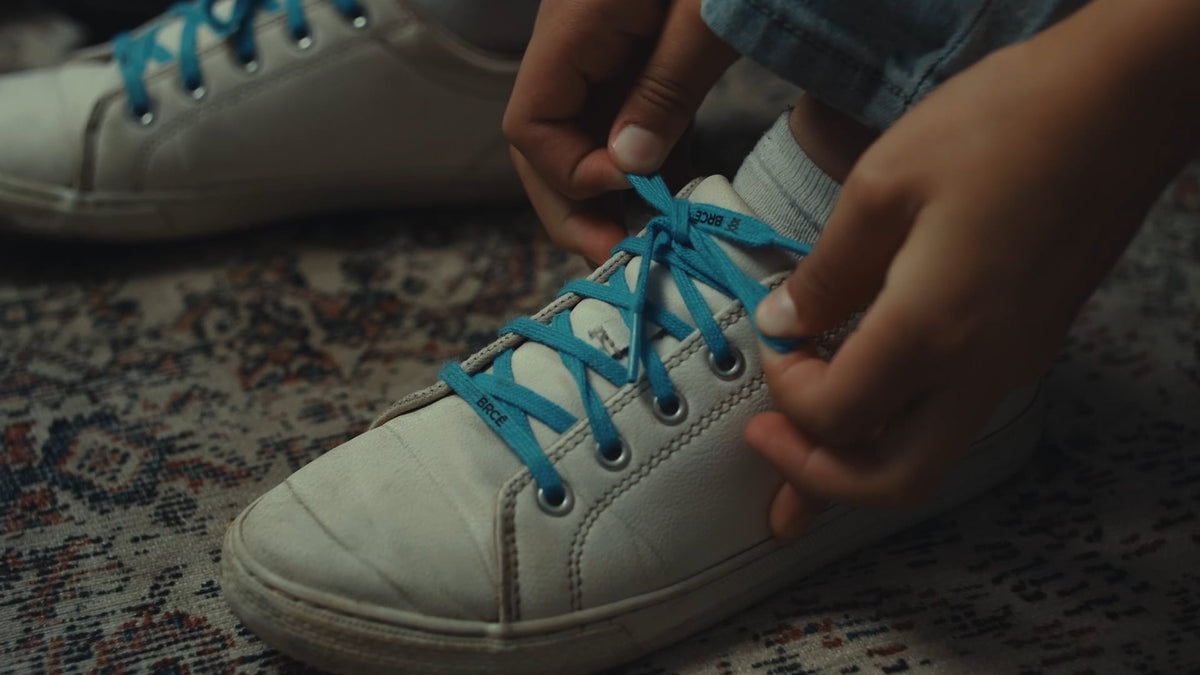
BRCĒ athletic laces use Lattice-Grip® Technology to increase grip where the lace crosses itself and forms a knot. Tiny surface ridges interact under tension, helping resist knot slippage and maintain the fit you set when you tied your shoes.
That grip is designed to reduce retying and help your shoes keep a more consistent fit through the demands of sports, exercise, and everyday wear. BRCĒ adapts the material and construction of each lace line to the demands of its sport.
What should you look for in athletic shoe laces?
Good athletic shoe laces should be durable, correctly sized, easy to adjust, and able to maintain consistent tension during movement. BRCĒ athletic shoe laces are designed around those needs, using Lattice-Grip® to help resist knot slippage. Lace shape, material, stretch, and surface texture can all affect how securely a shoe stays tied and how pressure is distributed across the foot. For sports involving running, jumping, or rapid changes of direction, consistent fit and knot security are especially important.
What Makes a Good Athletic Shoelace?
There is no single athletic shoe lace that works for all sports and every shoe. Your movement, your shoe fit, and your preferred tension and flexibility all factor into the right shoelace for you.
When purchasing athletic shoe laces, consider:
- Shoelace Knot Security: Your shoe lace’s knot needs to be kept secure during frequent movement. This depends on the lace's tension, friction, and material. BRCĒ’s Lattice-Grip® adds grip where the lace crosses and ties to help resist knot slippage.
- Shoelace Tension Consistency: Pressure and tension on your shoes depend on the sport. Proper laces should provide a consistent fit throughout sport and exercise without requiring reties. BRCĒ laces are designed to help hold the tension you set in each section of the shoe.
- Shoelace Durability: Repeated friction against eyelets, lace crossings, dirt, moisture, and regular tying can wear down shoelaces over time. BRCĒ’s patented polymer composite is designed to resist fraying caused by the unique needs of different types of sports footwear.
- Shoelace Stretch: Some flexibility improves comfort and accommodates natural changes in foot shape during movement. Too much flexibility makes tension adjustment more difficult.
- Shoelace Friction and Shoelace Grip: Laces interact with both the knot and the shoe. This interaction can affect knot stability and gradual tension changes.
- Shoelace Shape: Flat and round laces distribute pressure and contact differently. BRCĒ chooses to use a flat profile across all of its laces to increase grip and distribute pressure.
- Correct Shoelace Length: A lace that is too short may not leave enough length for a secure knot, while one that is too long can create excess loops and tails and affect tension.
- Shoelace Adjustability: Athletes need the ability to adjust the tension of the heel, midfoot, and forefoot based on their shoes and activity.
Does Shoelace Material Matter for Sports?
Yes. Material and quality matter, and BRCĒ adapts its patented polymer composite to the different needs of each sport. Shoelace material can affect friction, elasticity, durability, moisture absorption, tension retention, and knot behavior.
The best materials depend on the sport, footwear, and the fit you want. For instance, a runner may want more flexibility and consistent tension over long distances. A hockey player may need laces that resist moisture and handle quick cuts and stops. BRCĒ adapts each sports lace’s materials to these demands, using BRCĒ Lattice-Grip® Technology to help maintain grip while adjusting the construction for each activity.

Flat vs. Round Athletic Shoelaces
Lace shape is only one part of the decision. Material, construction, surface texture, tie methods and the shoe itself also affect comfort and performance. Generally, flat laces create a broader contact area where the lace crosses itself, helping distribute pressure across the foot.
All BRCĒ shoelaces have a flat profile because that flat surface gives our Lattice-Grip® more area to work with at lace crossings and within the knot. Our goal is to help hold your chosen tension while spreading lace pressure across the shoe upper.
|
Feature |
BRCĒ Flat Laces |
Round Laces |
|
Surface contact |
The flat profile provides a broad contact area where the lace crosses itself and forms a knot. |
The rounded profile’s contact area varies with its diameter and construction. |
|
Pressure distribution |
The flat profile helps spread lace pressure across the top of the foot. |
Pressure depends on lace thickness, tension, and footwear construction. |
|
Knot grip |
Lattice-Grip® works at lace crossings and the knot to help resist slippage. |
Grip depends on material, surface texture, and how the knot is tied. |
|
Tension adjustment |
Adjust tension by section. Lattice-Grip® helps maintain the fit you set. |
Adjustment and tension retention vary with the lace’s construction. |
|
Best use |
BRCĒ adapts its flat construction and stretch to the demands of each sport and footwear type. |
Lace and shoe-dependent |
Elastic vs. Non-Elastic Athletic Laces
BRCĒ athletic laces are designed for athletes who want more control over shoe tension while maintaining a traditional tied-shoe fit. Highly elastic laces stretch readily under load. If that stretch allows the shoe to loosen around the foot, your foot may move more inside the shoe during cuts, jumps, and quick stops. A good way to think about it: if your shoe can slip on, it can easily slip off, and that could increase your risk of injury.
This is why we tune stretch to the sport. BRCĒ Running laces have controlled stretch throughout, and Hoops laces use sectional elasticity where the foot needs flexibility. Racket and Football/Soccer laces have minimal stretch, while Hockey laces have minimal-to-no stretch. In any sport or exercise (even walking), Lattice-Grip® provides better grip at the crossings and strong knot tension to help lock in your chosen fit.
How Tight Should Athletic Shoe Laces Be or How Tight Should I Tie My Shoes?
Athletic shoe laces should be snug enough to secure the heel and midfoot without causing numbness, pinching, or concentrated pressure. The foot should remain stable during movement, but the forefoot should still have enough room for comfortable motion.
Your heel should feel secure, but you should also not feel too much pressure around the midfoot.
Signs that your laces may be too tight include numbness, tingling, or discomfort across the top of the foot. Laces that are too loose often let your heel move around excessively, make your shoes feel too loose, and make you stop constantly to tighten and retie your laces.
BRCĒ recommends standard crisscross lacing with balanced tension across the forefoot and midfoot. Lattice-Grip® is designed to help maintain that comfortable tension after you tie. Start with the fit you need in each section of the shoe, rather than tightening every section as hard as possible.
Why Do Athletic Shoelaces Come Loose During Sports?
Athletic shoe laces can loosen for several reasons during sports and exercise activities. Repeated impact, rapid cuts, and vibrations can alter knot tension and create movement throughout the shoe. Moisture, weather conditions, surface friction, and worn-out laces can also contribute to loosening. Excess lace length may shift more during activity, making it harder to keep a secure knot.]
A lace’s construction can also influence knot stability during rigorous activity. BRCĒ’s Lattice-Grip® uses microscopic surface ridges that interact where the lace crosses and ties. That grip helps resist the small movements within a knot that can let it slip, so the fit you set is more likely to stay consistent through activity.
How to Choose Athletic Shoelaces by Sport
Running
Runners are in constant motion and need something that withstands constant impact over hundreds or thousands of steps. You need stable heels, consistent tension, and enough flexibility for when your feet need to bend, whether on the track or on the trail.
Our BRCĒ Running laces are our most versatile and comfortable laces, targeted for repetitive forward motion and natural changes in foot shape over long distances. Controlled stretch in the lace provides comfort and allows natural foot expansion while holding tension.
Explore BRCĒ Running Shoelaces for running, sprinting, trail running and most sports applications.
Basketball
Basketball involves fast jumps, pivoting, side cuts, and quick stops. Players may need consistent tension and secure knots during frequent changes of direction.
Our BRCĒ Hoops shoelaces use sectional elasticity to provide flexibility where it matters while maintaining a secure fit during multidirectional play.
Explore BRCĒ Hoops Shoelaces.
Football and Soccer
Cleat sports combine sprints, cuts, accelerations, and changing field conditions. The lace's durability, fit, and tension matter as much as the shoe itself when playing on dry, wet, or muddy fields.
Our BRCĒ Football/Soccer shoelaces combine high tensile strength and minimal stretch to help maintain secure tension during sprinting, cutting, kicking, and contact.
Explore BRCĒ Football Shoelaces.
Hockey
Hockey skates have different demands on laces since a skate’s fit and tension are closely connected to performance. Players may consider lace durability, pressure distribution, and the ability to maintain tension.
Our unwaxed BRCĒ Hockey laces are designed for high tension, longer lacing, rigid eyelets and the moisture and abrasion associated with ice sports. They are also wider and more structured than our other laces, with minimal-to-no stretch. This structured feel helps you set tension by section. Lattice-Grip® builds grip into the lace itself to help resist slippage, with no wax coating to crack, peel, or wear away.
Explore BRCĒ Hockey Skate Laces for Ice Sports.
Tennis and Court Sports
Tennis and other racket sports involve constant lateral movement, pivots, and sudden stops and starts. A comfortable midfoot is key to maintaining a familiar feel throughout a match.
Our BRCĒ Racket laces emphasize higher tensile strength and minimal stretch to help maintain a consistent fit during rapid directional changes.
Explore BRCĒ Racket Shoelaces.
Kids
Whether on the playground or playing sports, kids move from pavement to grass fields, gym class, or through mud and dirt.
BRCĒ designed kids' laces for comfort and everyday versatility, helping them stay tied through everyday play. Their shorter lengths suit children’s footwear, with controlled flexibility for everyday movement.
For parents, repeated stops to retie can interrupt everything from getting out the door to watching a game. A lace that comes undone during a fire drill also means a child has to pause and sort it out. BRCĒ Kids Shoelaces use Lattice-Grip® to help resist loosening through recess, practice, and play, while still tying and untying like traditional laces.
Choose the length for your child’s shoes so the knot is easy to tie and the loops stay manageable. BRCĒ Kids laces suit everyday sneakers and general play; for dedicated cleats or hockey skates, compare the relevant sport line and check that its length and width fit the footwear.
Explore BRCĒ’s Kids Shoelaces.
Standard Shoelaces vs. BRCĒ Performance Shoelaces
|
Feature |
Standard Shoelaces |
BRCĒ Performance Shoelaces |
|
Adjustable tension |
Yes |
Yes |
|
Sport-specific design |
Depends on the product |
Construction adapted to each sport |
|
Knot security |
Varies |
Lattice-Grip® helps resist knot slippage |
|
Tension consistency |
Varies |
Designed to help maintain your chosen fit |
|
Athletic durability |
Varies |
Patented polymer composite designed for repeated sport use |
|
Traditional tying |
Yes |
Yes |
Do Better Shoelaces Improve Shoe Lockdown?
Shoelaces can affect how securely a properly fitted athletic shoe holds the foot because they control tension across the shoe upper. Laces with better grip and more consistent tension can help maintain that fit during movement, but they can’t correct a wrong size or poorly fitting shoe.
Proper footwear fit comes first. The lace system then helps you adjust and maintain that fit. BRCĒ laces support that second step by helping resist slippage at the crossings and knot, so you can maintain your chosen fit without simply pulling every section tighter.
How BRCĒ Athletic Laces Are Designed to Stay Secure
BRCĒ athletic laces are designed around the same criteria: knot security, pressure distribution, and consistent tension.

Our patented Lattice-Grip® Technology is based on microscopic surface structures, which create greater interaction between sections of the lace inside the knot. When tension is applied, microscopic ridges interact across multiple contact points to help resist slipping.
The aim is to reduce retying so you can focus on your performance. BRCĒ also designs different lace lines for specific activities. From the repeated forward motion of running to the side movements of basketball and court sports, each product targets the sport's movement needs.
BRCĒ has also appeared on ABC’s Shark Tank. Learn more about the patented material technology behind BRCĒ laces.
What Length Athletic Shoelaces Do You Need?
The length of your athletic shoe lace depends on the number of eyelets on your shoe, its construction, lacing pattern, and how much lace you need for your preferred knot.
Laces that are too short may not leave enough to tie comfortably. A lace that is too long creates unnecessary loops and excess material that can get in your way and become untied.
The easiest way to find your ideal lace size is to count the number of eyelet pairs on your shoe, or remove your existing laces, lay them flat without stretching, and measure them end to end. If that length gives you enough lace for a comfortable knot without oversized loops or tails, use it as your starting point when choosing BRCĒ laces.
Use the listed lengths for your chosen BRCĒ line to match your measurement:
|
BRCĒ lace line |
Listed lengths in inches |
|
Running, Hoops, Football, and Racket |
36, 54, 72 |
|
Kids |
24, 36 |
|
Hockey |
96, 108 |
When Should You Replace Athletic Shoelaces?
New laces can be a practical way to improve an athletic shoe’s fit. You do not have to wait until a lace breaks to choose one that better suits your sport.
Switching to BRCĒ Performance Laces gives you grip designed to help your knot resist slipping and keep your shoes at a more consistent tension. For a runner, that can mean fewer stops to adjust the fit; for a court or field athlete, it means less distraction from laces loosening during play.
Keeping shoes securely tied and loose lace ends under control also helps address a potential trip hazard. Choose a BRCĒ lace line that matches your sport, then set a comfortable fit in correctly sized footwear.
Are Performance Shoelaces Worth It?
BRCĒ Performance Laces are a good choice for those who continually experience slipping laces, want more consistent tension or want to replace factory laces with ones designed for their sport.
But they are not a substitute for properly fitted footwear. You still need correctly sized footwear that is the right shape for your intended activity.
A BRCĒ performance lace can, however, help you maintain the fit you had when you first tied your shoes.
Find the right BRCĒ lace for your sport and keep your focus where it belongs: the next mile, play, shift, game, or rep.
FAQs
What are the best shoelaces for athletic shoes?
The best athletic shoelaces are durable, correctly sized, easy to adjust, and able to maintain secure tension during movement. Material, shape, stretch, and surface texture all influence performance. BRCĒ athletic laces combine a flat profile with Lattice-Grip® Technology to help resist loosening, with constructions tailored to different sports.
Are flat or round laces better for sports?
Flat laces provide more surface contact and broader pressure distribution. BRCĒ uses flat laces across its range so that this broader contact works with Lattice-Grip® at the crossings and knot.
Should athletic shoelaces stretch?
Some stretch can improve comfort, but excessive elasticity may reduce precise tension control. The ideal amount depends on the sport and how securely the shoe needs to hold the foot. BRCĒ Running laces have controlled elasticity, while Hoops laces use sectional elasticity. Racket and Football/Soccer laces have minimal stretch; Hockey laces have minimal-to-no stretch. How you are using your shoe matters, and BRCĒ has a lace to match.
How tight should athletic shoe laces be?
Athletic shoe laces should secure the heel and midfoot without causing numbness, pinching, or excessive pressure. The goal is stability, not maximum tightness. With BRCĒ laces, use standard crisscross lacing and adjust each section to a comfortable fit before tying the knot.
Why do my athletic shoelaces keep coming undone?
Repeated impact, changing tension, knot movement, smooth lace surfaces, and worn materials can all cause athletic shoelaces to loosen during activity. BRCĒ laces use Lattice-Grip® to fight slippage at the knot and crossings to maintain your chosen tension during movement.
Do better shoelaces help shoe fit?
Shoelaces can improve how consistently tension is distributed across a properly fitted shoe. They cannot correct shoes that are the wrong size or shape. BRCĒ laces are designed to help maintain the fit you set by resisting knot slippage and tension loss.