In both American football and traditional football, players need their football cleats to stay on while sprinting, cutting, stopping, or battling through contact in mud, rain, or turf. Proper lacing creates the right fit across the forefoot, midfoot, and heel without adding unnecessary pressure.
The right lacing technique can help solve common fit issues like heel slippage, pressure across the top of the foot, and laces loosening during play. This guide will show you how to lace your football cleats correctly, how tight they should feel, and different lacing methods for different foot shapes and fit concerns. We will also cover how to keep your football cleat laces tied and when to replace your cleat’s laces.
Shop BRCĒ Football & Soccer Laces
What is the best way to lace football cleats?
For most players, BRCĒ Football and Soccer Laces should be laced in a standard criss-cross pattern, working evenly from the bottom eyelets upward. Keep the forefoot comfortably secure and the midfoot evenly tensioned, with the firmest comfortable tension at the upper eyelets to hold the heel. The laces should feel snug without causing pinching, numbness, or pressure across the top of the foot. The goal is a secure heel and midfoot fit without compressing the forefoot or restricting circulation.
Steps on How to Lace Football and Soccer Cleats
Step 1: Center the Laces
Thread the laces through the bottom eyelets and pull both sides until they are equal in length. Having equal lace lengths will give you enough lace to work with to create even tension as you move up the cleat. Depending on your cleats’ construction, the lace may go over or under the eyelets. The lower part of the cleat should hold your forefoot comfortably without squeezing your toes.
Step 2: Use a Criss-Cross Pattern
Cross the right lace over to the left side and feed it through the next eyelet. Then bring the left lace over to the right side and feed it through the opposite eyelet in the same row.
Repeat this process as you work your way towards the top of the cleat. As you do this, don’t pull too tightly; instead, take away any slack that is present.
Step 3: Keep the Forefoot Comfortable
Your forefoot should be snug and not feel too tight. Your toes should have enough room to move, and there should be no pressure points anywhere across the widest part of your foot. If the forefoot feels too tight, loosen the laces around the lower eyelets.
Step 4: Secure the Midfoot
Secure your foot and cleat by gradually tightening the middle rows of laces until they feel firm around your midfoot. Keep moderate tension over the instep so you do not concentrate pressure across the top of your foot.
Step 5: Adjust the Upper Eyelets
The upper eyelets affect how secure the cleat feels around your heel and ankle.
If you notice your heel moving during sprints and maneuvers, you can tighten your cleats slightly through the upper eyelets. Don't pull the entire lace as hard as possible; instead, adjust the upper section so your heel feels secure while your forefoot stays comfortable. This is where BRCĒ recommends the firmest functional tension, while keeping the fit comfortable.
Step 6: Tie a Secure Knot
After you adjust your cleat to fit properly, tie a firm knot. The knot should sit snugly against the shoe with manageable loops and tails. Tuck or secure excess lace so it doesn’t interfere with your movement during play.
Tip: Always test your fit by walking, jogging, and moving quickly before taking the field. If your heel moves, your cleat feels too tight, or the laces loosen, adjust tension before starting the game.
How BRCĒ Laces Help Maintain Your Cleat Fit
A good lacing pattern sets the fit. BRCĒ Football and Soccer Laces use Lattice-Grip® to help maintain it: tiny surface structures grip where the lace crosses itself and forms a knot, helping resist slippage as you sprint, cut, and change direction.
The Football/Soccer construction combines high strength with minimal stretch, so the tension you set feels more consistent through play. The practical aim is fewer stops to retie and a secure fit that stays comfortable without pulling every row tighter.
Football vs. Soccer Cleat Lacing: Is There a Difference?
While lacing techniques are similar between football and soccer cleats, where you need tension may vary depending on the shoe’s construction and the demands of the sport. BRCĒ recommends standard criss-cross lacing for players in either sport, with tension adjusted to the cleat’s construction, foot shape, and movement. Lace placement and collar height vary by model; follow the lacing path built into your cleat.
How Tight Should Football Cleats Be?
Football cleats should feel snug around the heel and midfoot without squeezing the foot or causing pain. Your heel should feel secure when sprinting or changing direction, while toes should still have enough room to move comfortably. With BRCĒ Football and Soccer Laces, set that fit by adjusting each section before tying the knot.
Think about these areas when checking your fit:
- Forefoot: Comfortable and flexible, while providing adequate space for toe movement.
- Midfoot: Secure and evenly tensioned to help resist unwanted foot movement, such as sliding inside the cleat.
- Instep: Moderately tensioned to avoid excess pressure across the top of the foot.
- Heel: Secure your heel during sprinting, cutting, accelerating, or stopping. If your heel slips noticeably, your cleat needs adjustment at the upper eyelets.
Signs Your Cleats Are Too Tight
If your cleats are too tight, you may feel:
- Pinching or concentrated pressure
- Numbness or tingling
- Excessive pressure across the top of your foot
- Restricted toe movement
- Increasing discomfort during activity
Signs Your Cleats Are Too Loose
Your cleats may be too loose if:
- Your heel moves during activity
- Your foot slides inside the shoe
- You need to retie your shoes constantly
- The upper part of your shoe doesn’t feel securely connected to your foot
- Your foot moves too much during cuts and acceleration
Football Cleat Lacing Techniques for Different Fit Problems
For BRCĒ Football and Soccer Laces, we recommend the standard criss-cross pattern as the starting point. Then adjust tension based on your comfort and fit, especially across the forefoot and instep.
Many players use the basic criss-cross pattern, but other lacing methods can address specific fit preferences.
Standard Criss-Cross Lacing
Best for: Most players and general football use.
For most players, we recommend a standard criss-cross pattern. Lace from the bottom eyelets towards the top while gradually tightening. The goal is consistent tension, not maximum tightness, so players can make small adjustments to individual sections based on their foot shape and how the cleat feels while moving.
Heel-Lock Lacing
Best for: Heel slippage or excessive movement inside the cleat.
Heel-lock lacing employs the top eyelets to create additional tension around the heel and ankle. This can be handy when your forefoot feels comfortable, but your heel still slips. Only use a heel-lock variation if your cleat’s eyelet layout supports it. BRCĒ’s starting recommendation remains standard criss-cross lacing with tension adjusted by section.
Lacing for Wide Feet
Best for: Pressure around the forefoot.
We advise using the same criss-cross method for players with wider feet. Rather than changing the lacing method, adjust the tension across the forefoot and instep for a better fit. The forefoot should not feel compressed. If the cleat feels too tight, reduce tension in that area.
Lacing for High Arches
Best for: Concentrated pressure across the instep.
If you have a high arch and experience pressure across the top of your foot, try reducing tension around the eyelets where your arch is at its highest point. You can keep tension on both sides, giving your instep more space.
Lacing for a More Secure Midfoot
Best for: A foot that moves inside the cleat.
If your forefoot and heel are secure but your midfoot isn’t, increase the tension through the middle eyelets. This lets you achieve a good fit between your foot and cleat without overtightening the entire shoe.
Does Cleat Lacing Affect Fit and Stability?
Yes. Lacing helps control how tension is distributed across the cleat and affects how securely your shoe holds your foot. BRCĒ Football and Soccer Laces use Lattice-Grip® to help maintain the tension you set.
For football and soccer players, a consistent fit helps limit unwanted movement inside the cleat during sprinting, cutting, kicking, sudden stops and starts, and multidirectional movement.
A correct fit helps manage:
- Heel movement
- Midfoot fit
- Pressure distribution
- Shoe security
- Consistency of movement
However, proper lacing cannot correct an incorrectly sized cleat. If the cleat is too narrow, too short, or doesn’t match your foot, changing your lacing pattern will not solve your problems and will offer only limited improvement.
Why Do Football Cleat Laces Come Untied?
Football cleat laces can come untied because movement changes tension and loosens the knot. BRCĒ Football and Soccer Laces use Lattice-Grip® to help resist that slippage. Common causes include:
- Repeated impact/vibration
- Sudden changes in direction
- Changing lace tension during movement
- Smooth or worn lace surfaces
- Knot movement
- Incorrect knotting
- Excess lace length
How to Keep Football Cleat Laces Tied During a Game
Tying a secure knot starts with consistent tension. BRCĒ Football and Soccer Laces add surface grip at the crossings and knot to help maintain that tension during play. Before you step out onto the field:
- Make sure the pressure on the lace is even.
- Remove excess slack before tying.
- Tie a balanced, secure knot.
- Keep excess lace length under control by either tucking or securing it.
- Replace worn-out laces.
- Check the knot before taking to the field.
- Consider getting performance laces that resist untying during athletic movement
If your laces still untie despite a secure knot, the issue may be the lace's condition or construction.

BRCĒ Football and Soccer Laces are engineered to keep your laces tied using Lattice-Grip® surface grip to help resist knot slippage and maintain tension during play.
Football Cleat Laces vs. Standard Shoelaces
Not all athletic laces are engineered the same. Standard shoelaces suit many types of footwear, while BRCĒ performance sport-specific laces are designed to accommodate specific athletic movements.
|
Feature |
Standard Shoelaces |
BRCĒ Performance / Football Laces |
|
Adjustable tension |
Yes |
Engineered to maintain tension |
|
Designed for athletic movement |
Varies |
Yes |
|
Knot security |
Depends on construction |
Engineered using Lattice-Grip® Technology to resist loosening |
|
Traditional tying |
Yes |
Yes |
How BRCĒ Football and Soccer Laces Are Designed for Athletic Movement
BRCĒ Football and Soccer Laces are built specifically for the demands of explosive, multidirectional sports. Our football and soccer shoe laces prioritize high tensile strength, minimal stretch, weather resistance, and secure tension. They have a flat, low-profile construction suitable for conventional cleats that accept removable flat laces.
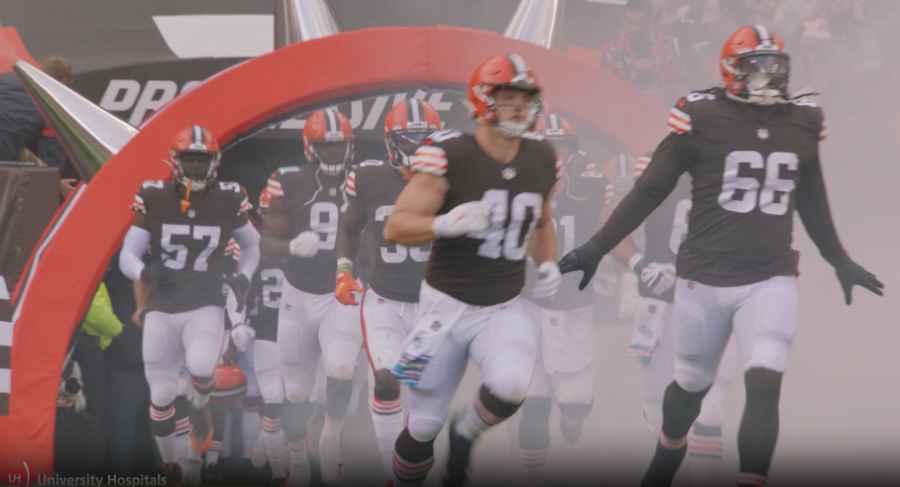
BRCĒ is the Official Lace Partner of the Cleveland Browns.
Our laces use BRCĒ’s patented Lattice-Grip® surface architecture, with micro-hooks and micro-ridges on the lace surface. This interaction adds surface grip where the lace crosses and ties, helping resist knot slippage and maintain more consistent tension.
For football and soccer players, the technology behind the lace supports:
- Untie-resistant performance during movement
- Consistent lace tension and a secure fit throughout play
- Microscopic surface grip between lace fibers
- Durability for repeated athletic use in wet, muddy, sweaty, and dry conditions
- Flexibility in movement without relying on excessively tight laces
Our goal is not to eliminate proper lacing but to work alongside proper fit and lacing techniques to keep your cleats secure.
What Makes BRCĒ Football/Soccer Laces Different from Running Laces?
Both BRCĒ Football/Soccer Laces and BRCĒ Running Laces are designed for athletic use, but their construction meets different demands.
BRCĒ Running Shoelaces focus on versatility, lightweight comfort, and controlled elasticity that accommodates natural changes in foot volume over longer distances during forward motion. Our BRCĒ Football and Soccer Laces prioritize high tensile strength, minimal stretch, weather resistance, and secure tension for multidirectional movement on grass and turf.
For cleat use, choose BRCĒ Football/Soccer Laces when you want a lower-stretch feel. Minimal stretch still allows the lace to flex with the cleat; it does not mean the lace is rigid.
When Should You Replace Football Cleat Laces?
Football cleats take a lot of wear and tear through repeated tightening, sweat, dirt, moisture, and field conditions. You don’t have to wait to replace your laces until something happens. BRCĒ Football and Soccer Laces are designed to provide a secure, comfortable fit for the unique demands of football and soccer.
FAQs
How should football cleats be laced?
Players using BRCĒ Football and Soccer Laces should use a standard criss-cross pattern, which provides even tension and lets you adjust the fit across different parts of the foot. Lace from the bottom upward and keep the cleat snug without creating uncomfortable pressure.
How tight should football cleats be?
Football cleats should feel snug around the heel and midfoot while remaining comfortable across the forefoot. They should not cause numbness, pinching, or excessive pressure. With BRCĒ Football and Soccer Laces, adjust tension by section and keep the instep comfortable.
How do you keep football cleat laces from coming undone?
Start with even lace tension, remove slack before tying, and use a secure, balanced knot. BRCĒ Football and Soccer Laces use Lattice-Grip® surface grip to help resist knot slippage and maintain tension during play.
Should you double-knot football cleats?
A double knot can provide additional security, but it should not be used to compensate for poorly tensioned or worn laces. The knot should remain secure without creating excessive bulk or pressure. With BRCĒ Football and Soccer Laces, start with balanced tension and a secure knot; Lattice-Grip® helps resist slippage at the knot and crossings to help maintain your fit.
What is heel-lock lacing for football cleats?
Heel-lock lacing uses the upper eyelets to create additional security around the ankle and heel. It can be useful when the heel moves noticeably inside the cleat. BRCĒ recommends standard criss-cross lacing with sectional tension adjustment as the starting point for its Football and Soccer Laces.
Can you skip eyelets when lacing football cleats?
Some lacing patterns leave selected eyelets unused to reduce pressure. Still, BRCĒ recommends starting with standard criss-cross lacing for its Football and Soccer Laces, including for wide feet and high arches. First, reduce tension across the forefoot or instep, and keep the cleat securely fitted.
How long should football cleat laces be?
The appropriate length depends on the number of eyelets and the lacing technique. Laces should be long enough to tie securely without leaving excessive loose ends that could interfere with play. When choosing BRCĒ Football and Soccer Laces, compare the available lengths with a pair you currently use that fits and ties well. Remove your current laces and lay them flat without stretching to measure and choose a size match.