
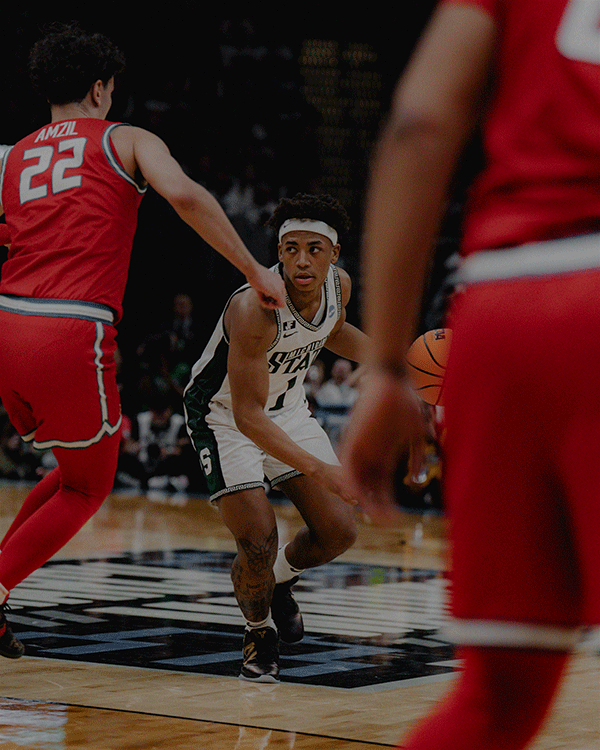
Relacing your shoes can improve comfort and support on the court. BRCĒ Hoops laces pair Lattice-Grip® technology and sectional elasticity to help maintain a comfortable fit and resist knot slippage through basketball movement. This guide will show you how to lace basketball shoes, adjust common fit problems, choose the right lace length, and when to replace your basketball shoes’ laces.
How should you lace basketball shoes?
Lace basketball shoes in a crisscross pattern, removing slack progressively and adjusting the heel and midfoot for a secure, comfortable fit. Tie a balanced bow and check the fit before play. BRCĒ Hoops laces pair Lattice-Grip® technology with sectional elasticity to help resist knot slippage while allowing targeted flexibility during cuts, jumps and changes of direction.
What Makes BRCĒ Hoops Different?

BRCĒ Hoops uses BRCĒ’s patented polymer composite with Lattice-Grip® built into the lace structure. Tiny surface ridges interact under tension where the lace crosses itself and forms a knot, helping resist slippage. Its flat profile helps spread pressure across the shoe upper, while sectional elasticity provides targeted flexibility for cuts, jumps and changes of direction. The aim is a comfortable fit that needs fewer adjustments during play.
How to Lace Basketball Shoes Step by Step
A standard crisscross pattern works for many basketball shoes and enables you to adjust tension from your forefoot to the upper eyelets. The goal is to secure your shoe without pulling the laces too tight, so they don't create painful pressure points or restrict movement.
Follow these steps using BRCĒ Hoops laces.
Step 1: Center the Lace
Thread the lace through the bottommost eyelets, keeping both ends even. Make sure the laces lie flat and are not twisted. Put on the shoes with the socks you intend to play in before setting the final tension.
Step 2: Cross the Laces Upward
Now, take one lace end and pass it through the eyelet on the opposite side. Repeat with the other end, forming an “X” on the tongue of the shoe. Continue this pattern as you move toward the top of the shoe, keeping the lace flat at each crossover.
Step 3: Remove Slack
After each crossover, pull on the laces to remove any extra slack. Work from the lower eyelets upward rather than tightening only at the top. This helps distribute tension along the shoe. Be careful not to make the bottom too tight, which can add pressure to your forefoot.
Step 4: Adjust the Upper Eyelets
As you reach the top of the shoe, see how your heel and midfoot feel. Adjust the upper laces so your heel feels secure without creating pressure on the instep.
If your basketball shoes have compatible upper eyelets, you can use a heel-locking technique to reduce heel movement. Not every shoe is designed for this, so check your shoe’s eyelets before attempting this technique.
Step 5: Tie a Balanced Bow
Cross one lace end over the other, pass it underneath, and pull the starting knot snug. Make a loop with each end, then cross the loops in the opposite direction to your starting knot. Pass one loop through the opening and pull both loops snug to finish the bow. The loops should sit across the shoe rather than point toward the toe and heel. Keep the loops and tails manageable. BRCĒ Hoops uses Lattice-Grip® technology to help resist knot slippage; a correctly tied bow still matters.
Step 6: Check Before Playing
Check your fit before playing by doing some controlled basketball movements. Make sure the heel feels secure, the midfoot is supported, and the forefoot feels comfortable. If you notice any pressure, pinching, or unwanted movement, adjust tension in the laces by section.
How Tight Should Basketball Shoes Be?
Basketball shoes should feel snug around your heel and midfoot areas but remain comfortable at the instep and forefoot. Laces should feel secure without causing excessive pressure, numbness, or restricted movement.
More pressure isn’t always better. If the shoe still feels loose, check the shoe’s fit and lacing pattern before increasing tension.
How BRCĒ Hoops Balances Flexibility and Secure Tension
Set a comfortable fit first. BRCĒ Hoops’ sectional elasticity accommodates movement in targeted areas, while Lattice-Grip® helps retain the tension you choose. That combination supports fit during jumps, landings, and lateral cuts without making maximum tightness the goal.
Adjust Your Lacing for Common Fit Problems
Use the adjustments in the table below to troubleshoot common problems.
|
Problem |
Adjustment to try |
What to check |
|
Heel movement |
Upper-eyelet or heel-lock adjustment on a compatible shoe |
Whether movement improves without uncomfortable pressure |
|
Forefoot pressure |
Reduce tension in the lower section |
Whether the shoe provides adequate width |
|
Instep pressure |
Use window lacing around the pressure area |
Whether pressure eases while the shoe remains secure |
|
Bow comes undone |
Retie a balanced bow and inspect the lace |
Knot construction, lace condition, and enough usable tying length |
|
Shoe feels loose while bow stays tied |
Readjust tension progressively from the lower eyelets upward |
Slack distribution and overall shoe fit |
Adjusting Forefoot Tension
If your basketball shoes feel tight on your toes or the front of your foot, loosen the lower section before adjusting the rest of the shoe. If this doesn’t reduce pressure, then the problem may be your shoe’s width, not the laces.
Window Lacing for Instep Pressure
Window lacing, aka gap lacing, may help reduce pressure over the instep.
Lace normally until you reach the eyelet row just below the pressure point. Instead of crossing laces over that area, run each lace vertically to the next eyelet on the same side, creating a window. Then, resume the crisscross pattern above the affected area. Adjust both sides evenly and check that the shoe still feels secure.
Heel-Lock Lacing for Compatible Basketball Shoes
Heel-lock lacing uses a compatible pair of extra upper eyelets to help reduce heel movement. After lacing to the second-to-last eyelets, feed each end through the extra eyelet on the same side to leave a small loop. Cross the ends and pass each one through the opposite loop, then gently draw the laces downward to snug the loops before tying your bow.
Use this technique only if the shoe’s upper-eyelet arrangement supports it and the laces leave enough length to tie comfortably.
What Length Basketball Shoelaces Do You Need?
The right basketball shoelace length depends on your specific shoe, the number and arrangement of eyelets, the lacing pattern, and how much lace you need to tie a bow.
If your current laces fit well, measure them before buying replacements. Remove the lace from your shoe and measure it from tip to tip, including the aglets.
If your current lace is too long or too short, do not use it as the target measurement. Follow the shoe manufacturer’s guidance and account for your chosen pattern; a heel lock may use more lace than standard crisscross lacing.
Choosing a BRCĒ Hoops Lace Length
BRCĒ Hoops basketball laces are listed in 36, 54, and 72 inch lengths. Compare your current well-fitting lace length with these options.
These lengths do not guarantee an exact match for your shoe size or number of eyelets. Eyelet spacing, lacing style, and bow size also influence how much lace you need. Before ordering, check the BRCĒ Hoops product page for available lengths and variants.
For youth basketball, measure the actual shoe rather than choosing a lace from the player’s age alone. Parents can help check forefoot comfort, heel fit, and manageable bow length before practice. BRCĒ Hoops’ conventional tying lets you adjust each section as needed; recheck the fit when shoes or playing socks change.
Why Basketball Laces Loosen
Basketball laces can loosen in a few ways, but most commonly the bow comes untied, or the shoe starts to feel loose even when the bow is tied.
When the Bow Unties
A bow or knot that repeatedly unties may relate to how you tied it, the quality of the lace, or whether you have enough lace to form a secure bow.
Review your technique. Make sure the starting knot and finishing bow balance each other, the loops are secure, and the lace leaves enough usable length to tie comfortably. BRCĒ Hoops’ Lattice-Grip® adds built-in grip where the lace crosses itself and forms the knot, helping resist the sliding that can let a bow loosen during play.
When the Shoe Feels Loose but the Bow is Secure
If your bow stays tied but your shoe still feels loose during movement, uneven tension, slack in your laces, or a mismatch between the shoe and your foot may be the cause. Tightening laces progressively from the lower eyelets upward can improve fit, rather than pulling only from the top of the shoe. BRCĒ Hoops’ grip at crossings is designed to help retain the tension you set; it cannot correct a shoe that is the wrong size or shape.
How to Choose Replacement Basketball Laces
When looking for replacement basketball laces, prioritize performance over color and appearance. The best laces for basketball shoes should fit your shoe’s eyelets, be long enough for your lacing pattern, and match the fit and feel you want on the court.
BRCĒ Hoops performance basketball laces combine a flat profile, built-in Lattice-Grip® and sectional elasticity to help maintain the fit you set through stop-start and lateral movement. Use the checklist below to compare those features with your current laces.
|
Feature |
What to look for |
BRCĒ Hoops application |
|
Length |
Enough usable lace for your lacing pattern and bow. |
Compare the measurement with the listed 36, 54, and 72-inch options; check the actual shoe. |
|
Width and tips |
Confirm the lace width, thickness, and aglets fit the eyelet openings. |
Check Hoops against the shoe’s actual openings and lacing path. |
|
Shape and surface |
Consider how the lace sits, handles, and interacts at crossings. |
Our flat profile helps spread pressure across the upper and provides a broader contact face for Lattice-Grip® at crossings and the knot. |
|
Stretch and adjustment |
Consider flexibility and how tension is adjusted. |
Sectional elasticity provides targeted flexibility at points where movement is needed while retaining conventional tying. |
|
Knot hold and tension |
Separate the bow untying from the fit changing with the bow intact. |
Lattice-Grip® helps resist knot slippage and retain tension at lace crossings. |
|
Condition and durability |
Check for fraying, damaged tips, and repeated wear. |
BRCĒ Hoops uses BRCĒ’s patented polymer composite, designed to resist fraying during repeated athletic use. |
|
Purchase details |
Check price, pair quantity, and applicable returns. |
Review the current product listing before purchasing your replacement. |
Flat vs. Round Basketball Laces: Why BRCĒ Hoops Is Flat
Flat and round laces have different profiles that affect how they sit across the shoe and how they feel when tied. BRCĒ Hoops uses a flat profile to provide a broader contact face at lace crossings and within the knot, giving Lattice-Grip® room to interact. The flat shape also helps spread lace pressure across the shoe upper. Shape alone does not determine knot hold: surface texture, material, tying technique, and the shoe’s construction all matter.
|
Feature |
BRCĒ Hoops |
Traditional Flat Basketball Laces |
Round Basketball Laces |
|
Profile |
Flat profile with engineered surface architecture |
Wide flat profile
|
More rounded cross-section. |
|
Fit through eyelets |
Check lace width, thickness, and aglet dimensions against the shoe’s actual openings. |
Lace width, thickness and aglets must fit the eyelet openings. |
Lace diameter and aglets must fit the eyelet openings. |
|
Surface Contact |
Flat contact face with Lattice-Grip® to help resist slippage at crossings and within the knot. |
Flat profile presents a broader face across the shoe. |
Contact follows the rounded profile. |
|
Knot Security |
Built-in Lattice-Grip® helps resist knot slippage; correct tying still matters. |
Depends on surface, material, and knot |
Depends on surface, material, and knot |
|
Pressure across the upper |
Flat profile helps spread lace pressure across the shoe upper. |
Broad contact face; comfort also depends on width, material, and tension. |
Narrower contact face; comfort also depends on diameter, material and tension. |
BRCĒ Hoops and Elastic No-Tie Basketball Laces
The terms ‘elastic laces’ and ‘no-tie laces’ are not the same. Some types of elastic laces use a special fastener that keeps shoes secure without tying a knot. Others use elasticity while still being tied normally.
You can tie, untie, and adjust BRCĒ Hoops laces like conventional laces. Hoops uses sectional elasticity for targeted flexibility during basketball movement, while Lattice-Grip® helps resist slippage at crossings and within the knot. These features serve different purposes: flexibility accommodates movement, and surface grip helps maintain the tension you set. A highly elastic lace may allow more change in fit under load; if the foot moves excessively inside the shoe during cuts or stops, reassess the stretch, tension, and overall shoe fit. Choose for adjustable court fit rather than slip-on convenience alone. Within BRCĒ’s range, Running laces offer controlled elasticity throughout for comfort over longer distances; Hoops uses sectional elasticity for basketball’s jumps, landings, and lateral movement.
When Should You Replace Basketball Laces?
Replace your basketball laces when you want better knot hold, more consistent tension, or a different feel during play. You do not have to wait until a lace breaks. BRCĒ Hoops combines resistance to knot slippage with targeted flexibility for basketball movement, while keeping conventional tying and adjustment.
Also replace laces that show significant fraying, broken aglets, or other damage affecting reliable use. Check length and eyelet compatibility if your current laces leave too little tying room or excessive loops and tails.
What BRCĒ Hoops Adds
If you are looking to improve your basketball footwear, BRCĒ Hoops offers three key features.
Flat construction: Provides a broader contact face at crossings and within the knot, while helping spread lace pressure across the shoe upper. Check width, thickness, and aglet fit against your shoe.
Sectional elasticity: Targeted flexibility intended to accommodate cuts, jumps, sudden stops, and landing during basketball.
Lattice-Grip®: Built-in surface architecture that helps resist slippage within the knot and where laces cross, supporting more consistent tension.
Hoops uses a conventional tying system, so you can lace, adjust, tie, and untie the shoes as usual. Check the available length, lace dimensions, and eyelet compatibility before ordering.
Explore BRCĒ Hoops basketball laces to compare the available options for your shoes.
For more detail on the underlying technology, visit the BRCĒ science page.
Basketball Lacing FAQs
Can I skip eyelets when lacing basketball shoes?
Yes, you can sometimes skip eyelets to change pressure or to accommodate a particular fit issue, but the result depends on the shoe and lacing pattern. BRCĒ Hoops can be used with a compatible pattern that skips eyelets, as long as your lace is long enough and fits the shoe’s openings.
Do all basketball shoes support heel-lock lacing?
No. Heel-lock lacing requires a suitable upper-eyelet arrangement, and not every basketball shoe supports it. Use BRCĒ Hoops laces with a heel lock only when the shoe’s eyelet layout, lace dimensions, and available tying length are compatible; otherwise, start with standard crisscross lacing and adjust tension by section.
Can I use regular replacement laces in basketball shoes?
Yes. Make sure your replacement laces match the length, width, and aglet dimensions your shoes require. BRCĒ Hoops is a performance replacement lace for players who want a flat profile, sectional elasticity, and a Lattice-Grip® surface to help resist knot slippage. Compare your current well-fitting lace length with the available BRCĒ Hoops lengths before buying.
Can I replace the laces in Nike, Adidas, or Jordan basketball shoes?
Replacement compatibility depends on the specific shoe model, eyelet openings, and lacing path, not just the brand. BRCĒ Hoops may be a suitable replacement lace if its length, width, thickness, and aglets fit your specific Nike, Adidas, or Jordan basketball shoes. Measure your existing well-fitting laces and check the actual openings before buying.
Are BRCĒ Hoops laces no-tie laces?
No. BRCĒ Hoops laces retain conventional tying and untying rather than using a no-tie fastener. Their sectional elasticity provides targeted flexibility, while Lattice-Grip® helps resist knot slippage.
Find the Right BRCĒ Hoops Laces for Your Basketball Shoes
The right basketball laces should fit your shoe, let you adjust tension comfortably, and still leave enough length to tie securely. Start by measuring your current laces, counting the eyelets, and deciding how you want to improve your fit.
BRCĒ Hoops combines a flat profile, sectional elasticity, and Lattice-Grip® technology in a traditional lace-up design. Check the product page and sizing guide to see available lengths and how to find the right fit for your shoes.
Shop BRCĒ Hoops Basketball Laces.
